
Pioneer MSc. Chemistry Graduate Among the Top Prize Winners at the 6th Commonwealth Chemistry Posters Competition
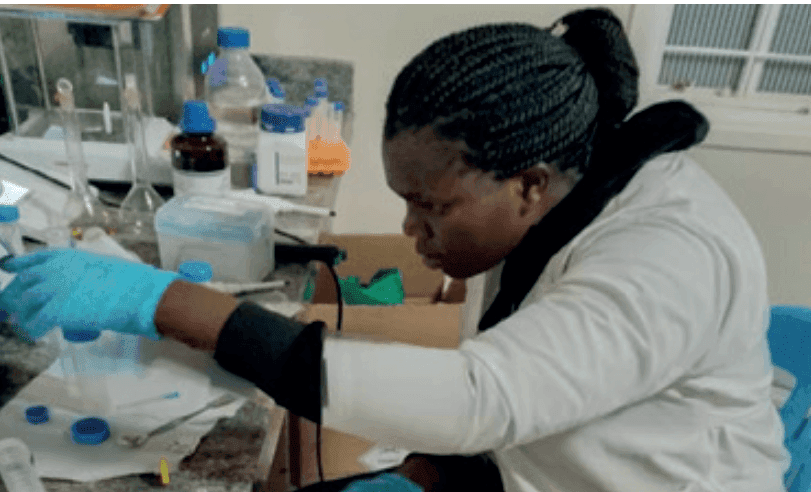
Pioneer MSc. Chemistry Graduate Among the Top Prize Winners at the 6th Commonwealth Chemistry Posters Competition | Photo: Muni University
Muni University has achieved a remarkable milestone on the global scientific stage after Yanduru Mercy, a recent graduate and one of the pioneers of the University’s MSc Chemistry programme, won a Poster Presentation Prize under SDG 3: Good Health and Well-Being at the 6th Commonwealth Chemistry Posters competition, held virtually from 1–2 October 2025. “
According to the organisers, the Commonwealth Chemistry Posters event “brings together chemists from across the Commonwealth working on similar and complementary challenges to tackle the UN Sustainable Development Goals (SDGs). Over,250 poster abstracts were accepted from presenters representing 23 countries for the 6th Commonwealth Chemistry Posters event in October.
Mercy joins a growing community of early-career Commonwealth chemists whose work was recognized for excellence and relevance.
Mercy’s victory was formally announced online on 8th December 2025, when Commonwealth Chemistry published the list of winners on its official website. Speaking about the honour, she noted that being recognised in the SDG 3 category was both humbling and inspiring, especially as her work speaks directly to public-health needs within the region.
Her winning work tackles one of Uganda’s—and wider sub-Saharan Africa’s—urgent public-health challenges: contamination of staple foods by aflatoxins. Aflatoxins are toxic, carcinogenic compounds produced by certain fungi, well known to pose serious health risks globally.
Mercy’s research “focuses on developing a green, sensitive, and efficient analytical approach for very low-level ddetermination of aflatoxins in cassava-based food products.” She explained that this is especially critical because cassava is a dietary staple in many communities, yet their quantification in complex food matrices remains a scientific challenge.
To address this challenge, she fabricated an extraction method involving eco-friendly sorbent materials from water-hyacinth biomass and eggshell-derived calcium carbonate, which she used to preconcentrate and enrich aflatoxins in traditionally processed cassava products prior to analysis using liquid chromatography–tandem mass spectrometry.This approach enhances analytical reliability while promoting sustainability, reflecting the core principles of SDG 3.